More about the white spots seen on MRI scans

November 10, 2013

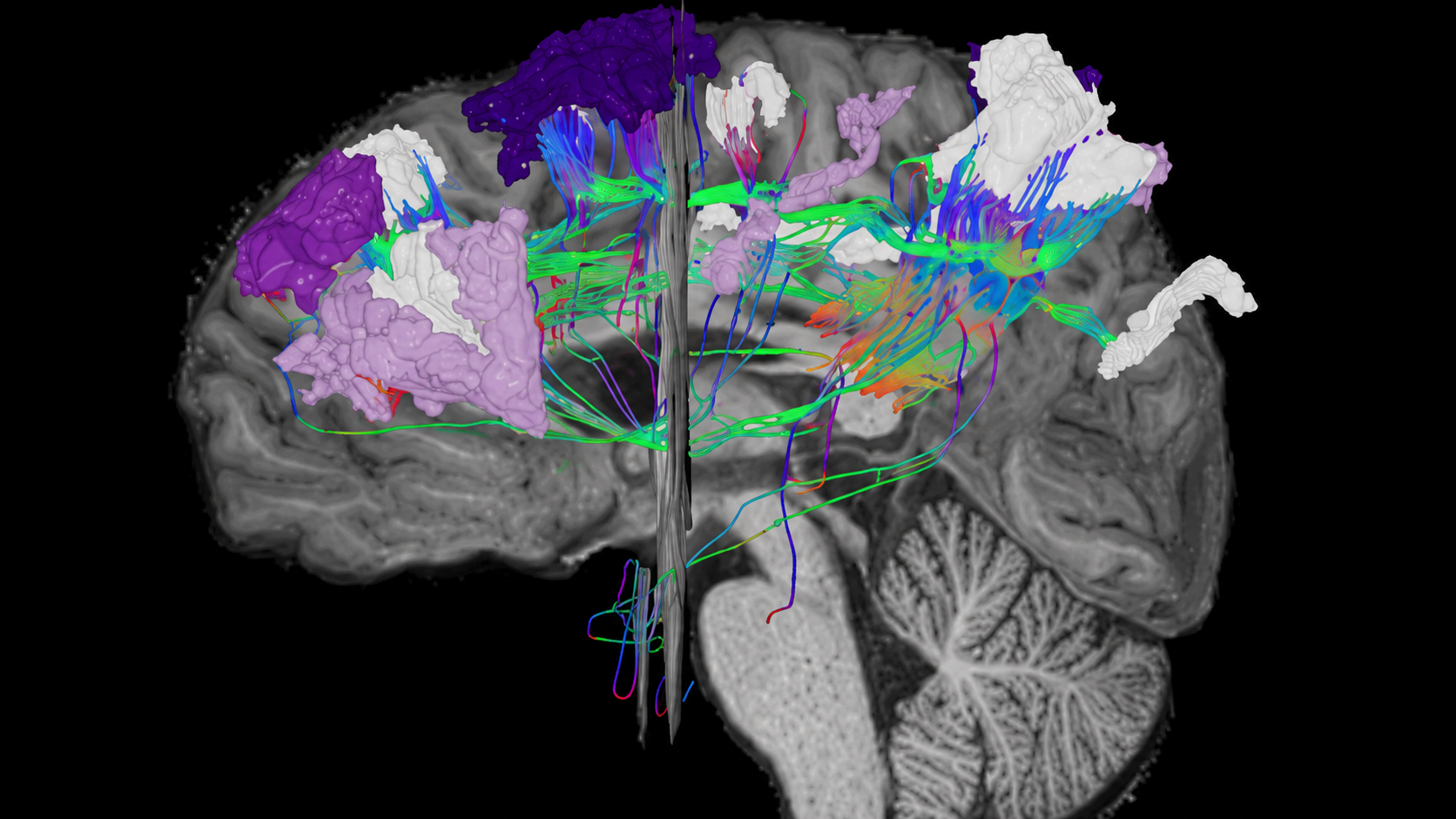
White matter lesions (WML) are more common in people who suffer from migraine headaches with or without aura and my recent post mentioned yet another study confirming this finding. Researchers from Johns Hopkins School of Medicine just published a study in the journal Neurology which provides further reassurance about the benign nature of these mysterious lesions. They examined over 1,000 migraine sufferers with two MRI scans separated by 8 to 12 years. While those with migraines had a significantly greater risk of having these WML or as these researchers called them white matter hyperintensities (WMH) the number of these lesions did not increase with the passage of time. This study contradicts a larger, so called CAMERA study which showed progression of the number of WMLs in women. That study was done in younger people and the authors speculate that whatever might be causing these WML may be occurring at a younger age when the disease of migraine is most active. It is a well established fact that migraines are most common in 20s, 30s, and 40s but then tend to subside.

Written by
Alexander Mauskop, MD
Continue reading
May 26, 2026
News
Why I Rarely Prescribe Topiramate, and What the New Data Shows
A new real-world study of 661 patients found that 67% stopped taking topiramate within six months, compared to 30% on candesartan. Candesartan also had a higher responder rate. Topiramate is FDA-approved; candesartan is not. The data makes the case for rethinking that priority.
Read article
May 21, 2026
Research
Your Brain Has Many Pathways, And TMS Can Now Use Them
A groundbreaking University of Iowa study shows that personalized fMRI-guided TMS can now reach and modulate the deep hippocampus — the brain’s command center for memory, emotion, and migraine — without surgery or heavy medications. By mapping each patient’s unique neural pathways, TMS delivers precise stimulation to surface “control points” that influence deep brain structures. Generic approaches barely work, but individualized targeting produces clear, measurable changes. At our headache clinic, we combine TMS and fMRI to offer this advanced, personalized treatment for migraines, depression, PTSD, anxiety, and more.
Read article
May 10, 2026
Research
Elismetrep: A Promising New Experimental Migraine Treatment
Elismetrep is a promising experimental migraine medication that targets the TRPM8 pathway rather than serotonin or CGRP. Early clinical trials suggest it may offer a new option for patients who do not respond well to current treatments.
Read article
Insights from Dr. Alexander Mauskop on headaches and migraines
Subscribe to the Blog.
Subscribe
Subscribe