


We always thought that certain parts of your brain are simply "out ofreach" without surgery or heavy medications. A new study from theUniversity of Iowa confirms what we’ve observed using fMRI to guide ourtreatment of neurological conditions with transcranial magnetic stimulation (TMS).
Deep inside your brain sits the hippocampus, a small structure that serves asyour command center for memory, learning, and emotional regulation. When itmalfunctions, the consequences can include Alzheimer's disease, depression,PTSD, anxiety, and even migraine. Traditionally, directly influencing thehippocampus required invasive surgery or medications that flood the entirebrain rather than targeting the problem.
Neuroscientists at the University of Iowa have now shown that TMS, the noninvasivetechnology we use in our practice, can reliably reach and modulate thehippocampus from outside the skull.
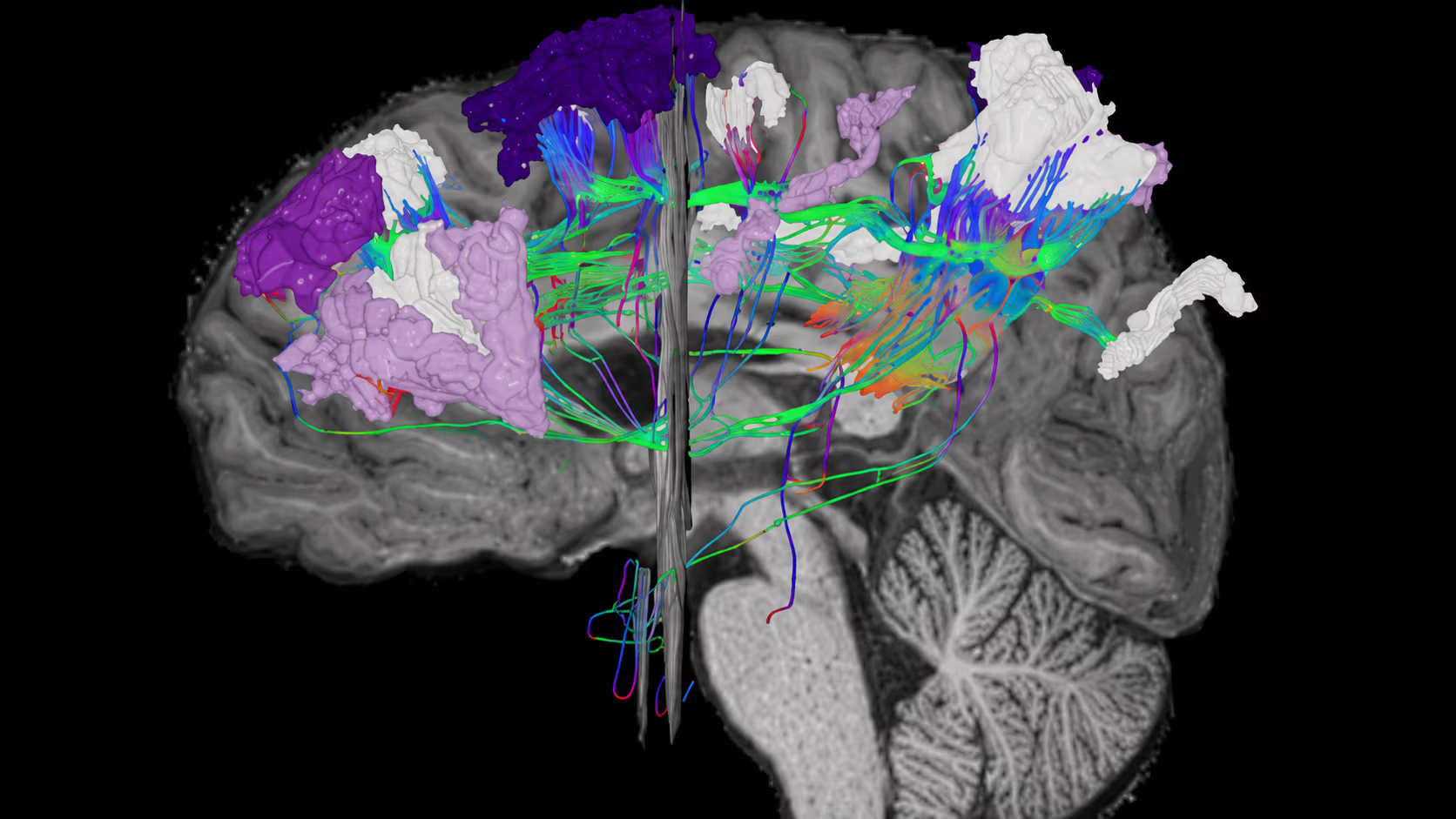
TMS delivers magnetic pulses through the scalp to stimulate brain cells on theouter surface. The hippocampus sits too deep for the magnetic field to reachdirectly. But the Iowa team discovered that by using advanced brain imaging(fMRI) to map each person's unique neural "highways," they could findthe exact spot on the brain's surface that acts as a remote control for thehippocampus. Stimulate that spot, and the signal travels down the tracks to thedeep brain.
An important finding is that it only works when the treatment is personalized.Every person's brain wiring is as unique as a fingerprint. When researchersused a generic, one-size-fits-all spot, the hippocampus barely responded. Whenthey mapped each patient's individual connectivity, the deep brain lit up withclear, measurable changes. This was confirmed by internal electrodes inneurosurgical patients and validated in 79 healthy volunteers.
Single-pulse TMS is already FDA-cleared for migraine, both for stopping attacksand preventing them. In our practice, we use repetitive TMS, which deliversthousands of pulses directed at sites identified by fMRI. This differs from thesingle-pulse TMS devices cleared for migraine, which deliver a few pulses at atime directed at the occipital cortex.
TMS is an established treatment for depression, OCD, andeven smoking cessation, with growing evidence in PTSD, anxiety, brain fog, longCOVID, post-concussion syndrome, and Alzheimer 's-related cognitive decline.
Researchers at Stanford, led by Dr. Nolan Williams,developed an accelerated fMRI-guided TMS protocol that achieved remission ratesas high as 86% in treatment-resistant depression in initial studies, farexceeding the roughly 30% remission rate seen with standard TMS protocols
This new research suggests that by mapping each patient'sunique brain connectivity, we could make TMS even more precise and effectiveacross all of these conditions.
At our clinic, we have access to both TMS and fMRI, whichmeans we are uniquely positioned to deliver this personalized,connectivity-guided approach to our patients with migraines and many other neurologicaldisorders. Studies like this one reinforce what we believe: the future of brainhealth is noninvasive, personalized, and grounded in understanding how each individual'sbrain is wired.