As a 68-year-old physician, I’m often asked about my own supplement regimen. Here is my approach to supplementation.
The uncomfortable truth about our modern diet is that even those of us eating “healthy” may not be getting adequate nutrition. Our food supply, while abundant, often lacks the nutrient density of previous generations. Even fresh vegetables and fruits grown in depleted soils may not provide the nutrition we expect. Having practiced medicine for decades, I’ve observed this reality in countless blood tests and patient outcomes.
My own blood tests have revealed borderline-low levels of vitamins D, B12, and magnesium – technically “normal” but at the bottom of the range. Scientific studies have shown that laboratory “normal” ranges are often too wide. When you’re at the bottom of that range, you’re likely functioning sub-optimally.
With few exceptions, herbal supplements are rarely subjected to large, controlled clinical trials. A rigorous study of turmeric showed that it improves memory. Astragalus has been subjected to many small clinical and preclinical studies that point to many possible benefits. Other herbal supplements I take have various degrees of evidence for their efficacy and safety.
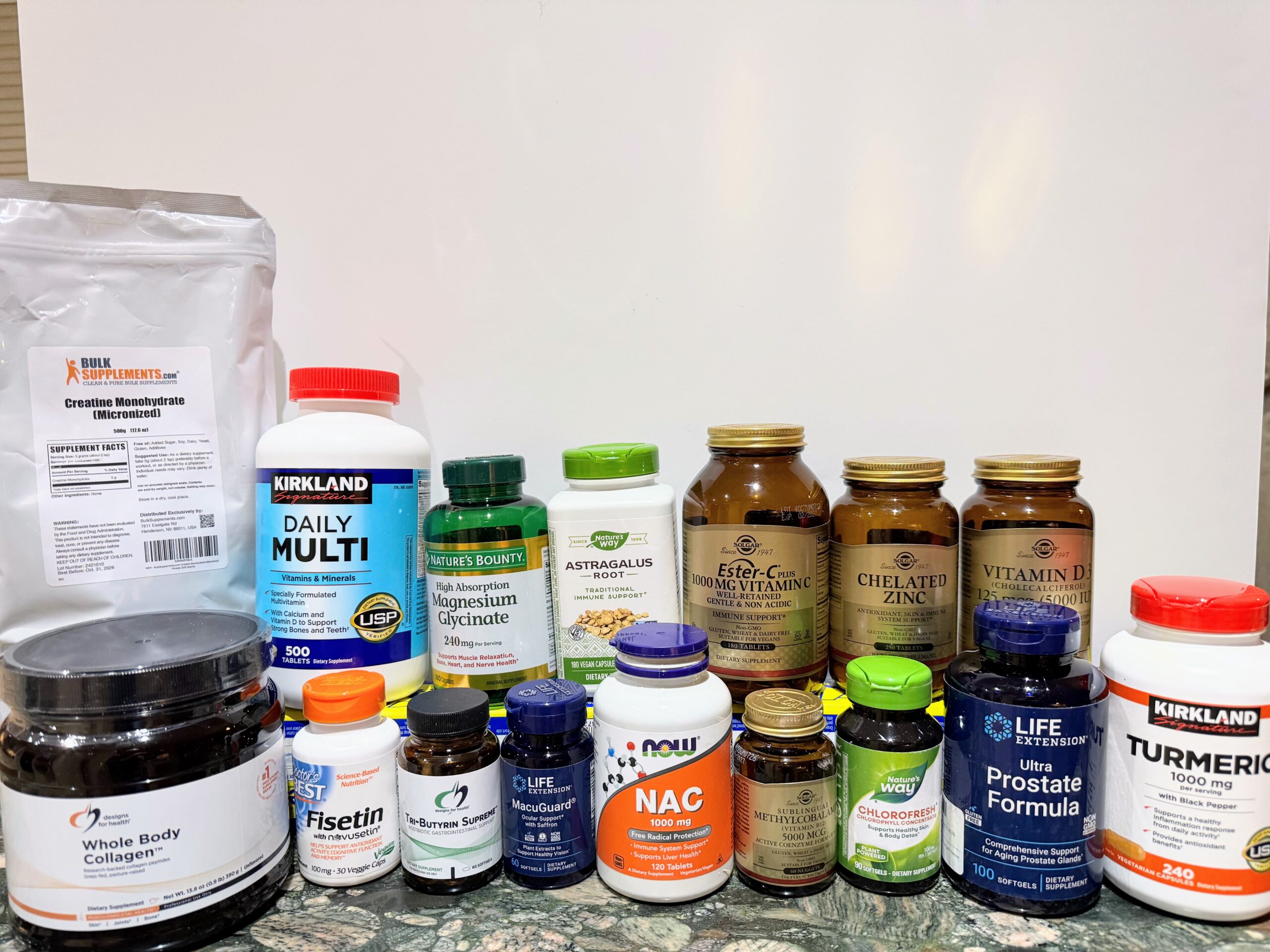
You can see all the supplements I take in the photo below. You can also see the brands of these products. To select the best brands, I usually consult Consumerlab.com. This independent testing organization is funded by membership fees and does not accept advertising or payments from manufacturers. They provide an extensive description of clinical trials and potential side effects and rank the brands according to their quality and cost.
Psyllium husk (Yerba Prima brand) is also part of my routine. Beyond maintaining regular bowel movements, it’s helped lower my cholesterol and apoB levels – crucial markers for cardiovascular health.
I include creatine in my regimen, timing it within an hour of exercise. While many associate creatine with bodybuilding, research shows it also supports cognitive function – particularly valuable as we age.
While I’m sharing my personal protocol, remember that supplementation needs vary significantly between individuals. Factors like age, medications, health conditions, and even genetic variations can affect what supplements are appropriate. What works for me may not be right for you.
The need for supplementation in our modern world stems from multiple factors: aging-related absorption issues, medication effects, chronic stress, and changes in our food quality. When I compare the taste and quality of foods during my travels in France and Italy to what we typically find in American supermarkets, the difference is notable.
Remember, supplements are exactly that – supplemental to a healthy diet and lifestyle. They’re not magic pills but tools to optimize health in our modern environment. Always consult with your healthcare provider before starting any supplement regimen, especially if you’re taking medications or have underlying health conditions.