Introducting Transcranial Magnetic Stimulation

Transcranial Magnetic Stimulation for migraines.

If migraines or chronic headaches are still disrupting your life despite treatment, it may be time to consider a  different kind of option.
Book an apointment
See Open Positions
A Neurology-Led Approach

TMS is an advanced, non-invasive treatment option for selected patients with difficult-to-treat migraine and chronic headache disorders.

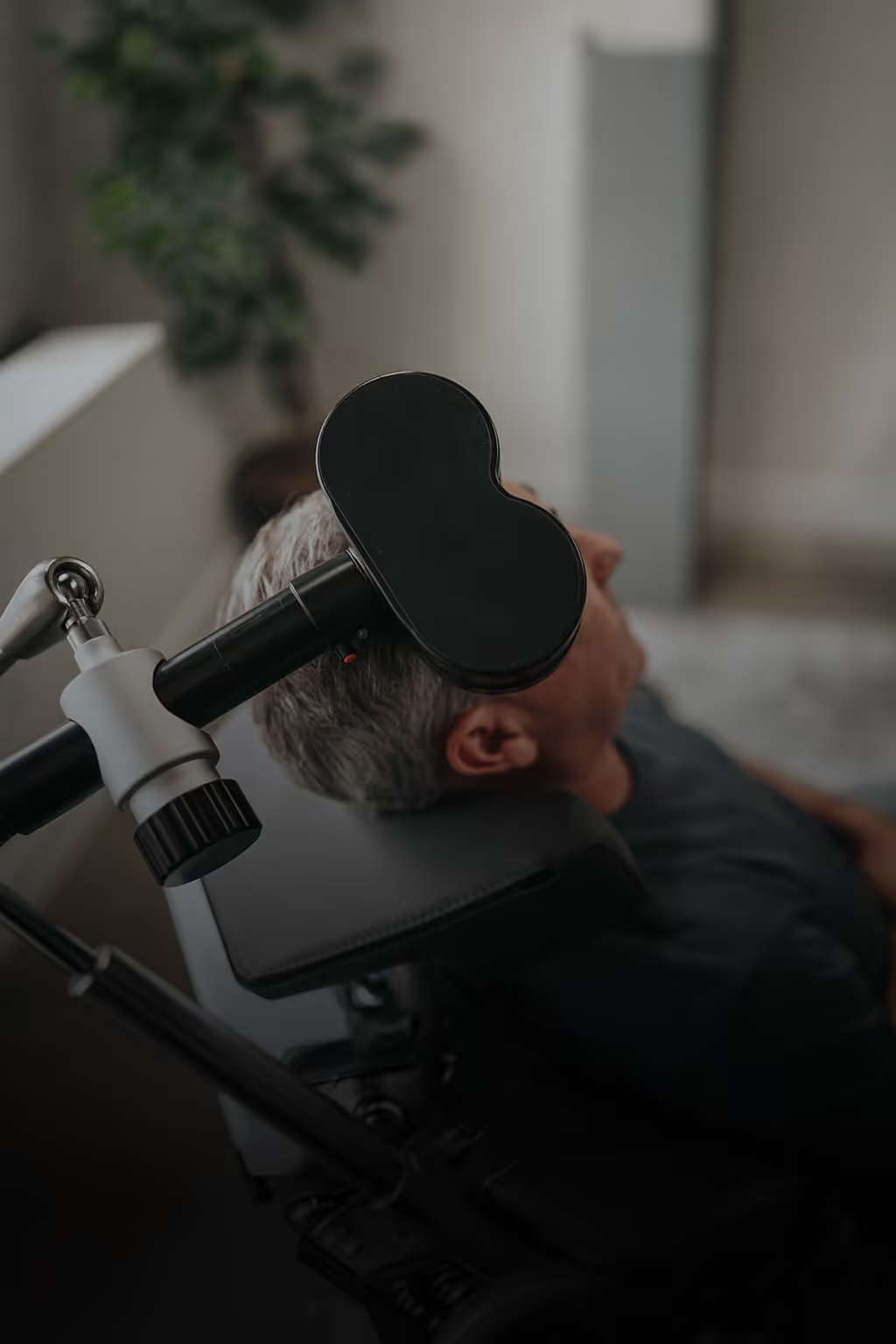
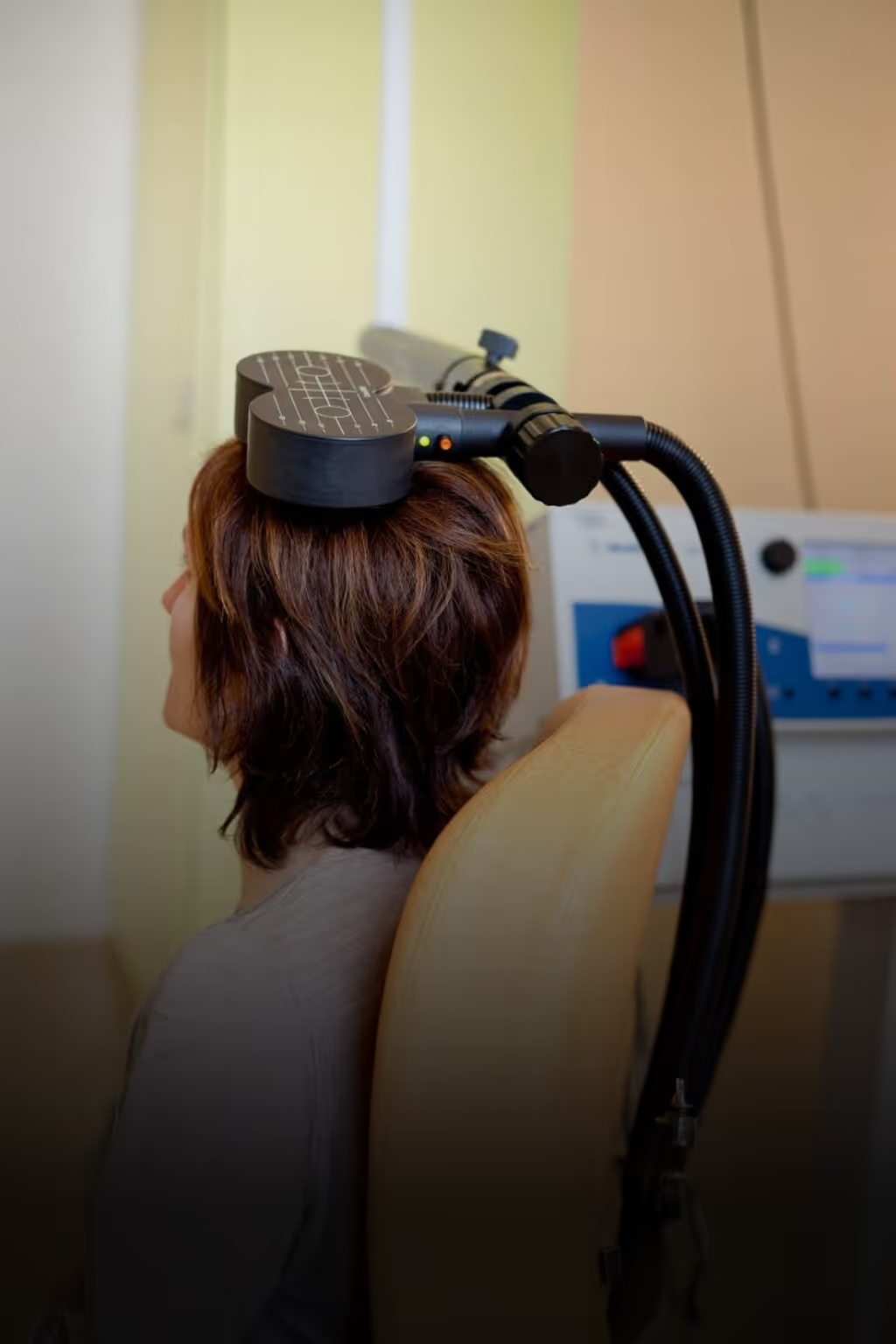
TMS is a non-invasive procedure that uses magnetic pulses applied from outside the head to influence activity in  targeted areas of the brain. It does not involve surgery, and patients remain awake and alert during treatment. In simple terms, TMS is used to affect brain circuits that may be involved in pain processing and other  neurological symptoms. For some patients, the main appeal is straightforward: it is a non-drug option that may be worth exploring when  standard treatment has not been enough or has caused side effects.
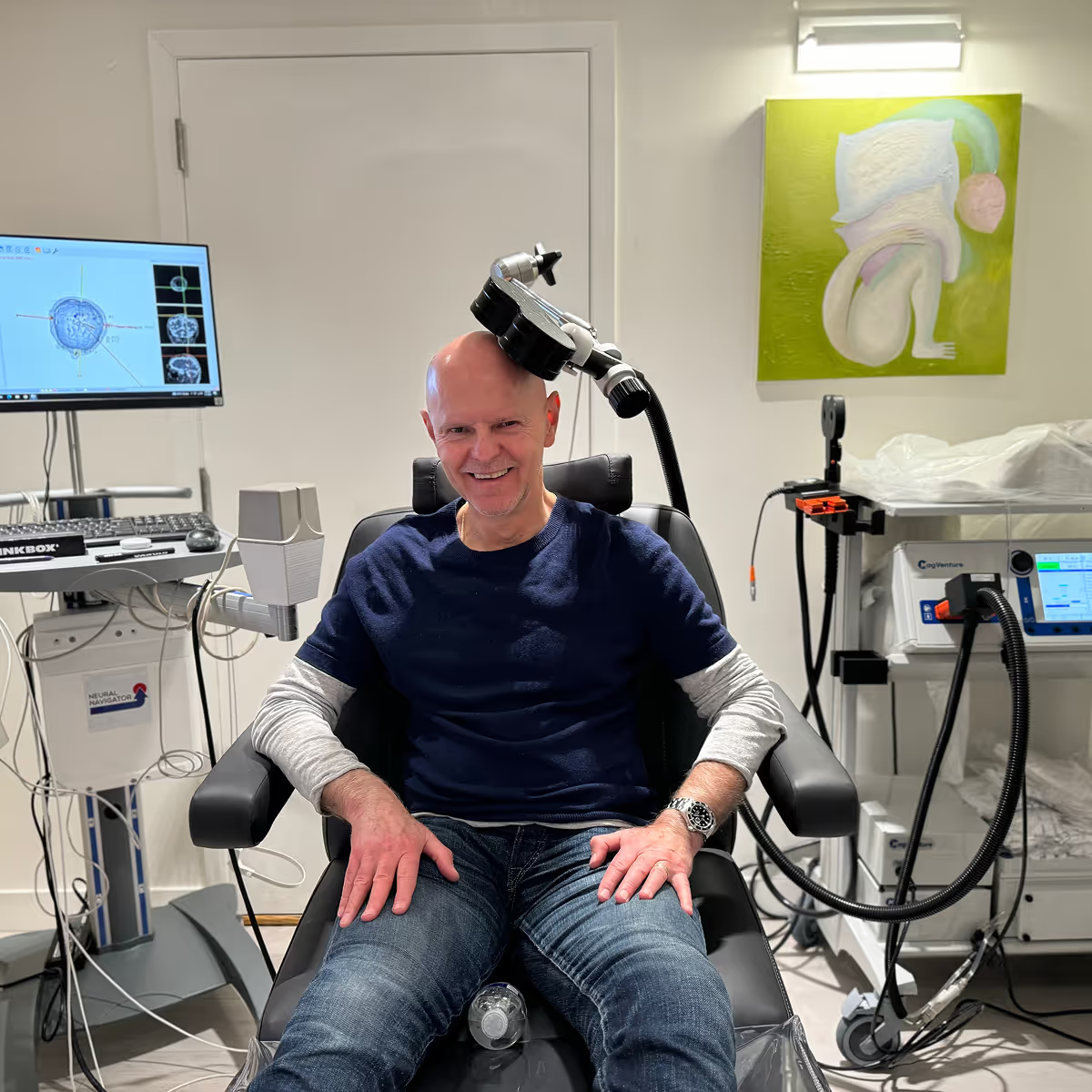
Patient consultation at the New York Headache Center.

A Neurology-Led Approach

Most people hear about TMS in a psychiatric setting. At New York Headache Center, our approach is different. We are a specialty neurology practice focused on migraine, chronic headache, facial pain, and related neurological conditions. Here, TMS is considered within a specialist neurological evaluation, not as a generic standalone  treatment. That distinction matters. The question is whether TMS may be  appropriate for your specific condition, treatment history, and symptom pattern.
Patient consultation at the New York Headache Center.

Why Patients Start Looking For TMS

Most patients do not start looking for TMS out of casual curiosity. They usually start looking when migraines are still interfering with work, family life, sleep, concentration, or  daily function despite treatment. Some have tried multiple medications. Others cannot tolerate side effects, have  contraindications, or feel they are running out of reasonable next steps. For these patients, the question often becomes: is there another specialist option worth discussing?
Patient consultation at the New York Headache Center.

How TMS Is Used In Our Office

At New York Headache Center, TMS is not approached as a generic treatment. We use advanced technology to improve precision in targeting. Our office uses neuronavigation and state-of-the-art  TMS equipment, and in selected situations we may also use functional MRI analysis to individualize treatment  targeting further.
Patient consultation at the New York Headache Center.

About TMS Treatment Sessions

Treatment sessions are performed while the patient is seated comfortably and awake. Patients typically hear and  feel tapping sensations on the scalp during treatment. There are no activity restrictions before or after a  session. Treatment length and frequency vary depending on the stimulation pattern, treatment goals, and the areas being  targeted. Some patients may need more frequent sessions at the beginning, followed by less frequent maintenance  sessions. It may also take several weeks before noticeable benefits appear.
IMPORTANT EXPECTATIONS ABOUT TMS

TMS is not the right treatment for every patient

TMS is not presented here as a guaranteed answer. Whether it makes sense depends on the diagnosis, prior treatment history, symptom pattern, and physician judgment. Some forms of TMS have established FDA-cleared uses in specific settings. At the same time, evidence for many  broader neurological applications remains more limited. For that reason, any decision to use TMS should be  individualized and medically guided. Our goal is not to overpromise. Our goal is to determine whether this is a reasonable option to consider in your  case.
Patient consultation at the New York Headache Center.

Why This Is Different From Standard TMS Marketing

Most public TMS marketing is built around psychiatric treatment, especially depression. At New York Headache Center, we are speaking to a different patient: someone whose main concern is migraine, chronic headache, or a related neurological problem, and who wants that question evaluated in a neurological  setting. This is why the page is centered on candidacy and specialist judgment, not generic treatment promotion.
Patient consultation at the New York Headache Center.

What to Expect During TMS Treatment

During a TMS session, you sit in a comfortable chair while a device delivers short magnetic pulses to specific areas of the brain. You remain awake and alert throughout the session. Most patients describe the sensation as a light tapping on the scalp. Sessions typically last between 20 and 45 minutes, depending on the treatment approach. There are no activity restrictions before or after treatment.
frequently asked questions

Common Questions Patients Have

Is this covered by insurance?
Chevron down icon
Coverage for TMS is more common in psychiatric settings than in neurological ones. Practical details vary and are best discussed during consultation.
Is this a real medical option, or just something experimental?
Chevron down icon
TMS is a recognized treatment approach, but whether it applies to your condition depends on careful evaluation—not assumptions.
Is this the same TMS used for depression?
Chevron down icon
The technology may be familiar, but the clinical context is different. At NYHC, TMS is considered within a neurological and headache-focused framework.
Freedom from migraines may include Transcranial Magnetic Stimulation treatment. Contact us to learn more.
If you’re wondering whether this could be a reasonable next step for your condition, the next step is a specialist consultation. That conversation is where we review your diagnosis, treatment history, and whether this option makes sense to consider. The goal is not to rush you into treatment. The goal is to determine whether you are an appropriate candidate.
Book an Appointment
Book an Appointment