100 Migraine Drugs, A to Z: codeine

September 5, 2018

Codeine is a mild opioid (narcotic) pain killer, which has less of an addiction potential of butorphanol, described in the previous post, or most other opioid drugs. However, it definitely can cause addiction and can be a “gateway drug” leading to the abuse of stronger prescription and illicit drugs. Some countries allow codeine to be sold without a doctor’s prescription, but it is always in a combination with other drugs. In Canada, codeine has to be mixed with two other drugs, usually with acetaminophen and caffeine and it is sold without a prescription, but from behind the counter rather than from open shelves.

A combination of codeine with caffeine, butalbital and either acetaminophen or aspirin (Fioricet with codeine and Fiorinal with codeine) is particularly problematic because caffeine can also cause medication overuse headache and butalbital is also addictive.

The main problem with codeine is that just like other opioid drugs it is not very effective and can cause or worsen nausea. If taken regularly (more than once a week) opioids can also cause medication overuse (or rebound) headache even in the absence of addiction. Codeine with acetaminophen is worth considering if triptans (sumatriptan or Imitrex and similar drugs) and NSAIDs (Advil or ibuprofen, Aleve or naproxen, and other) are ineffective or contraindicated.

I do have patients taking Fioricet or Fiorinal with codeine or codeine with acetaminophen with good relief and few side effects, but I can count those patients on the fingers of one hand.

Written by
Alexander Mauskop, MD
Continue reading
June 21, 2026
Research
Childhood Stress Rewrites the Body's Metabolism
Two new papers—one in Science and one in Biological Psychiatry—offer a more biologically grounded way to think about the long-term impact of early life stress. Rather than acting only at the psychological level, early adversity appears to leave lasting marks on both the epigenome and mitochondrial function. These findings suggest that early experience may help shape core aspects of cellular energy metabolism, a pathway already central to how we understand migraine.
Read article
June 17, 2026
Research
A New Controlled Trial Suggests Even a Short Behavioral Treatment Can BeEffective for Chronic Pain
A new randomized controlled trial in PAIN found that just six 30-minute CBT sessions for chronic musculoskeletal pain significantly reduced pain interference and improved sleep and physical quality of life, with benefits sustained at follow-up. The findings suggest that brief, scalable behavioral treatments could be integrated into routine primary care and headache practice to improve function without requiring long-term psychotherapy.
Read article
June 7, 2026
News
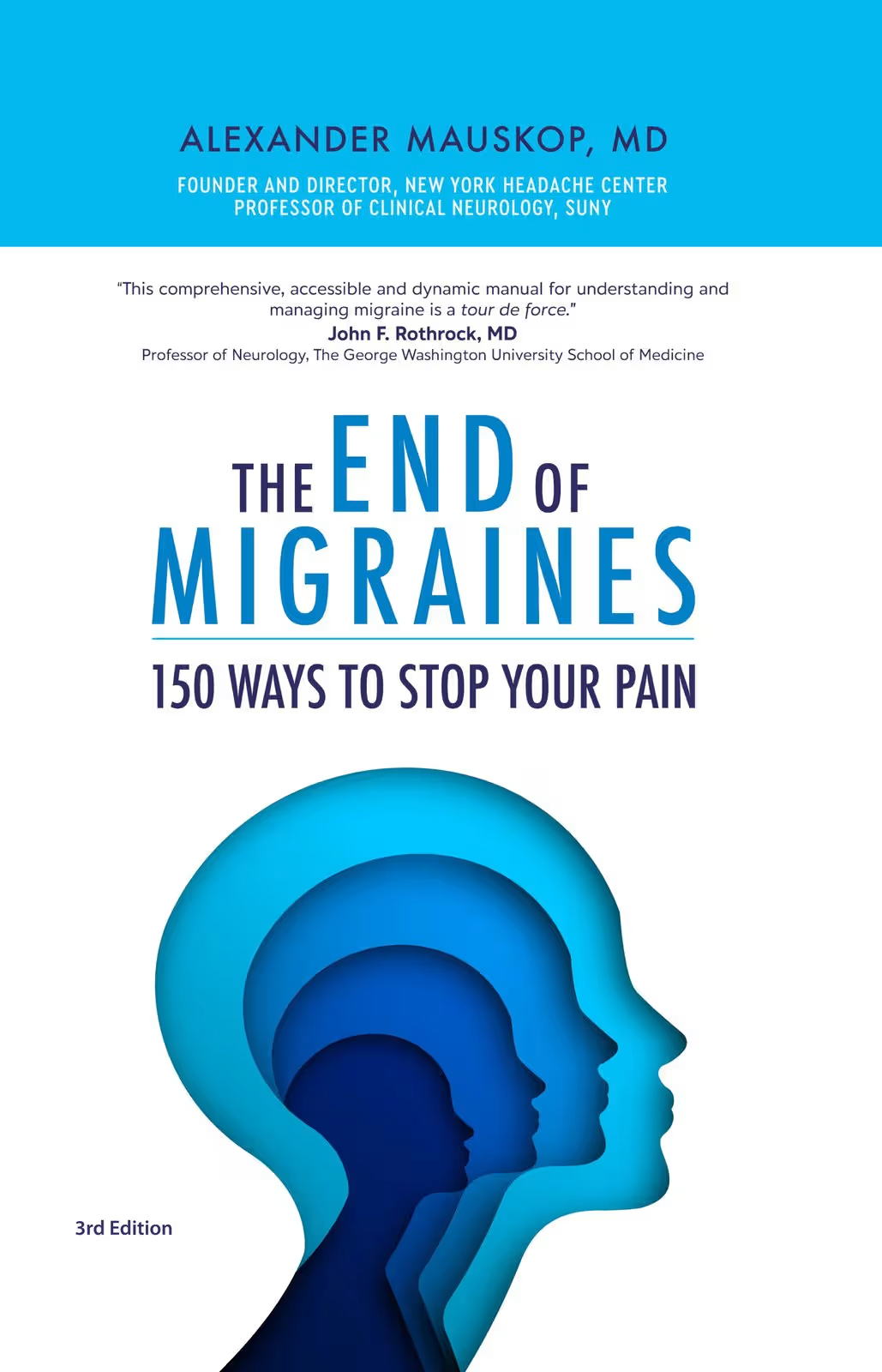
A new edition of my migraine book and an upcoming conversation with Dr. Sanjay Gupta
An overview of why I updated The End of Migraines: 150 Ways to Stop Your Pain for a 3rd edition, what has changed in migraine treatment, and how a more structured, realistic approach can help people who feel they’ve “tried everything.”
Read article
Insights from Dr. Alexander Mauskop on headaches and migraines
Subscribe to the Blog.
Subscribe
Subscribe