Migraine does not cause brain damage

November 25, 2007

Migraine does not cause cognitive impairment, according to a new Danish twin study. This important finding reassures millions of migraine sufferers and confirms our clinical observation. Another recent study in mice suggested that inducing brain changes similar to what occurs during a migraine attack in humans can cause brain damage. This report was widely circulated in the media and has caused unnecessary anxiety in many migraine sufferers. Clearly, whatever those mice experienced was not a migraine attack and, more importantly, brains of mice are very different from human brains.

The Danish study looked at 139 pairs of twins where one of the twins had migraines and the other one did not. Comparing their cognitive abilities revealed no difference for those who had migraine with or without aura, even after taking into account age, age of onset, duration of migraine history and number of attacks. Presence of aura is thought to indicate a more serious condition with a slight increase in the risk of stroke. However, on one cognitive test, men with migraine with aura did better than their twin without migraines.

Written by
Alexander Mauskop, MD
Continue reading
June 7, 2026
News
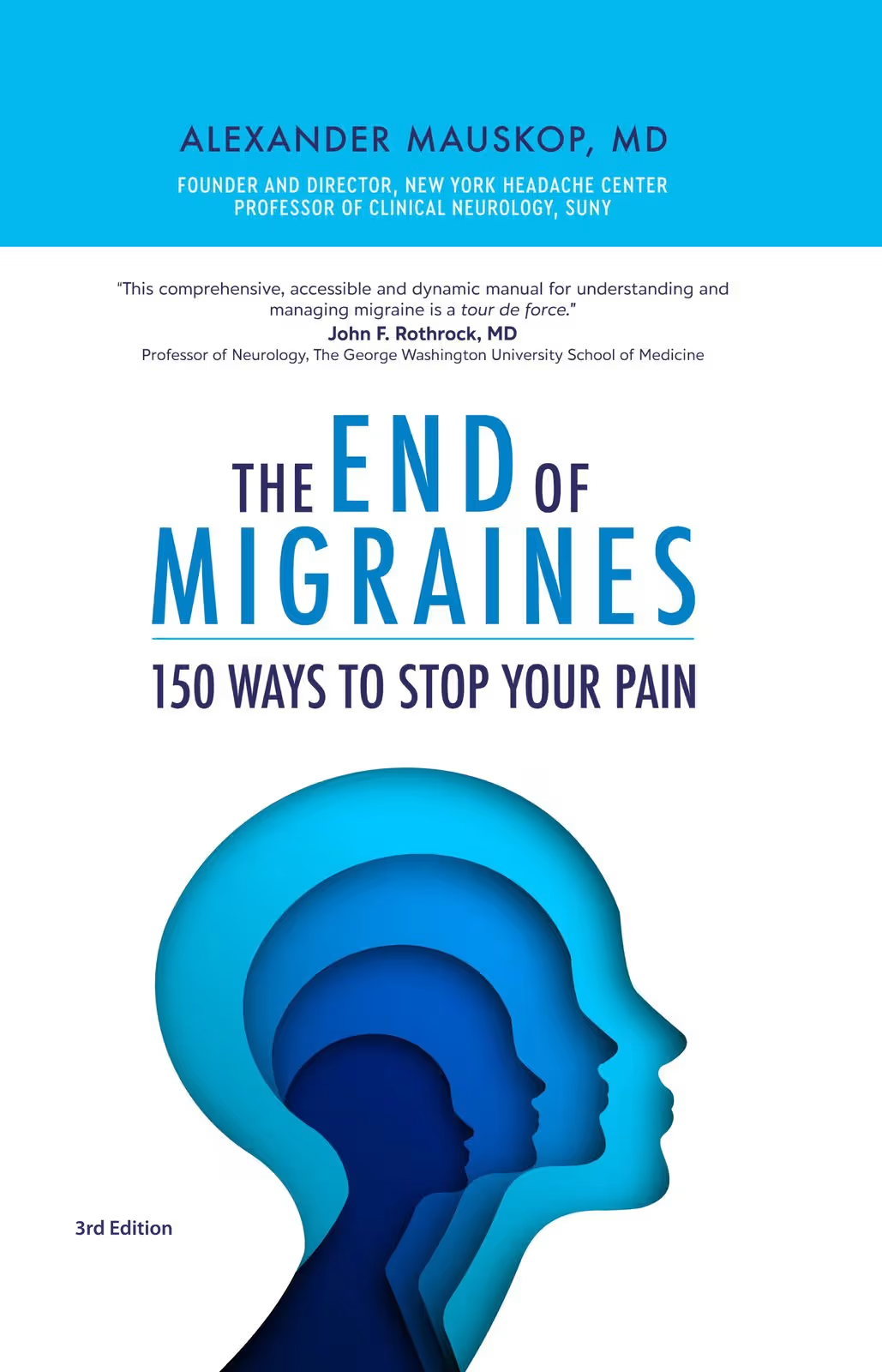
A new edition of my migraine book and an upcoming conversation with Dr. Sanjay Gupta
An overview of why I updated The End of Migraines: 150 Ways to Stop Your Pain for a 3rd edition, what has changed in migraine treatment, and how a more structured, realistic approach can help people who feel they’ve “tried everything.”
Read article
June 4, 2026
Research
A New Study of Meat Intake, Genetics, and Brain Health
A newly published Swedish study suggests that the relationship between diet and brain aging may be more genetically specific than previously understood. Researchers followed over 2,000 older adults for up to 15 years and found that higher meat consumption was associated with slower cognitive decline and lower dementia risk, but only in those carrying the APOE E4 genetic variant, the most common hereditary risk factor for Alzheimer's disease. This may be relevant for people with headaches.
Read article
June 3, 2026
News
Keynote address at the 22nd Annual Neuroscience Zappulla Research Day
I was honored to be delivering the keynote address at the 22nd Annual Neuroscience Zappulla Research Day on Wednesday, June 3, at the Hackensack Meridian Neuroscience Institute, JFK University Medical Center in Edison, NJ.
Read article
Insights from Dr. Alexander Mauskop on headaches and migraines
Subscribe to the Blog.
Subscribe
Subscribe