Archive for November, 2007

Migraine does not cause brain damage

Sunday, November 25th, 2007

Migraine does not cause cognitive impairment, according to a new Danish twin study.  This important finding reassures millions of migraine sufferers and confirms our clinical observation.   Another recent study in mice suggested that inducing brain changes similar to what occurs during a migraine attack in humans can cause brain damage.  This report was widely circulated in the media and has caused unnecessary anxiety in many migraine sufferers.  Clearly, whatever those mice experienced was not a migraine attack and, more importantly, brains of mice are very different from human brains. 

The Danish study looked at 139 pairs of twins where one of the twins had migraines and the other one did not.  Comparing their cognitive abilities revealed no difference for those who had migraine with or without aura, even after taking into account age, age of onset, duration of migraine history and number of attacks.  Presence of aura is thought to indicate a more serious condition with a slight increase in the risk of stroke.  However, on one cognitive test, men with migraine with aura did better than their twin without migraines.

Botox for arthritis?

Wednesday, November 21st, 2007

Botox relieves migraine headaches and other painful conditions, such as sciatica, neuralgias and neck pain.  A recent study of 43 patients with arthritis of the shoulder suggests that Botox may relieve arthritis pain as well.  This was a double-blind study where half of the patients were given Botox and the other half saline injections.  Neither the doctor nor the patient knew what was being injected.  The results clearly favored Botox and the difference was statistically significant.  This adds another possible indication to a long list of conditions that Botox might relieve.  The safety of Botox in this study was as remarkble as in all previous studies, which now number in hundreds.  

Migraine Brain

Wednesday, November 21st, 2007

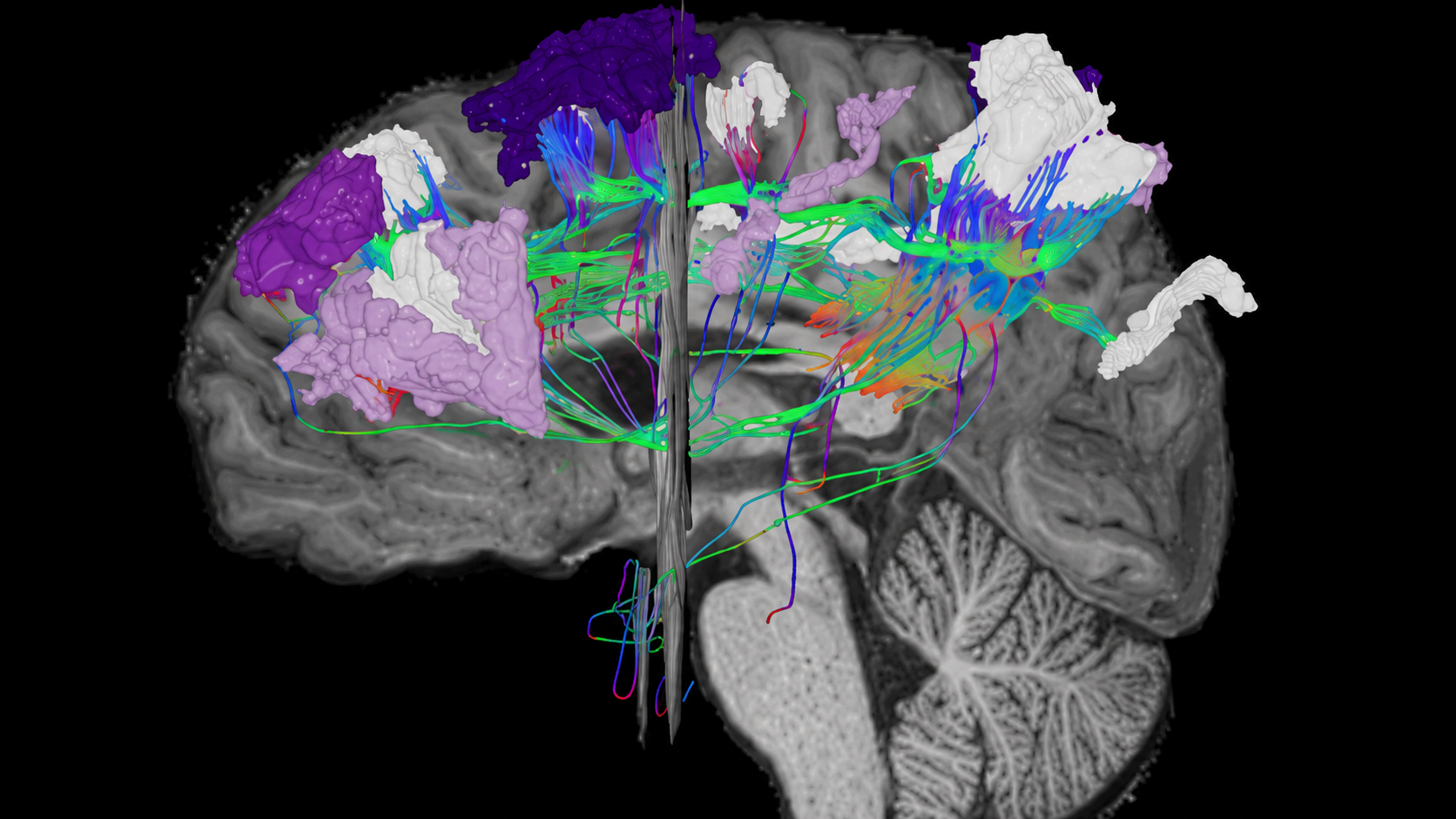
A recent study published in Neurology showed that migraine sufferers have thicker gray matter in the part of the brain that perceives pain.  Thickening of the gray matter indicates larger number of brain cells in that area, which is not necessarily a bad thing.  However, all of the commentary in the media suggests that this is another indication of brain damage in migraine patients.  This study is not a cause for alarm and all of the previous research also indicates that the vast majority of migraine sufferers are not at risk of brain damage.

How long do you have to take medicine?

Monday, November 12th, 2007

This is a common question people ask when we suggest that they start taking a daily preventive medication.  A groundbreaking study just published by Hans-Christoph Diener and his colleagues answers this question.  Over 800 patients were placed on topiramate (Topamax), a popular epilepsy drug used to treat headaches.  After 26 weeks half of the patients were switched to placebo and the other half contined on Topamax for another 26 weeks without doctors or patients knowing who was taking what.  It turns out that stopping Topamax did worsen headaches, but not that much - in a 28-day period those on Topamax had one fewer day with migraine than those on placebo.  This suggests that what most headache specialists have suspected from their experience all along is correct.  That is many patients can stop taking their daily medication after about six months without significant worsening.  However, there are some patients who may need to stay on a medication for longerer periods of time.

Vitamin D and exercise

Friday, November 9th, 2007

We always recommend exercise as one of the most effective preventive treatments for migraines and tension-type headaches.  However, it appears that some patients may have difficult time exercising because of low vitamin D levels.  Vitamin D receptors are located within muscle and are important for normal muscle activity.  Michael Hooten and colleagues discovered that pain clinic patients who had low vitamin D levels had lower exercise tolerance as well as lower general health perception than patients with normal levels.  Most people are familiar with the role of vitamin D in bone health.  However, it has many other functions in the body.  In addition to exercise tolerance, another unexpected effect of vitamin D deficiency is to worsen symptoms of gastro-esophageal reflux, which causes heartburn and other symptoms.  Taking vitamin D supplements relieves reflux symptoms in some patients.  Many people are not taking sufficient amounts of vitamin D.  If deficiency is documented by a blood test, patients usually need to take 1000-2000 units a day.

Sex differences in response to opioid drugs

Friday, November 9th, 2007

It appears that women respond better to morphine than men and men respond better to a different opioid (narcotic) drug, butorphanol.  This was the conculsion of a study presented at the American Pain Society.  The next step that the researchers plan is to look at possible genetic factors which may explain this difference.  Although the study was small and needs to be confirmed, such knowledge could have an important practical impact.  Opioid drugs are rarely used for the treatment of headaches, but when necessary it would be useful to know which one has a better chance of success.

Science of acupuncture

Friday, November 9th, 2007

A recent study by Richard Harris presented at the American Pain Society’s meeting of 18 patients with fibromyalgia showed different brain mechanisms for true and sham acupuncture.  It appears that placebo response in sham acupuncture can be differntiated from the true acupuncture response by measuring binding properties of the mu opioid receptor in the brain.  This study further confirms the fact that one of the most important mechanisms of action of acupuncture is through the endogenous opioid system and that it is different from the mechanism of the placebo effect.

MSG and headaches

Friday, November 9th, 2007

Many patients tell me that monosodium glutamate (MSG) gives them headaches, but we never had a scientific study to explain or support this observation.  A study by Brian Cairns and his colleagues in the November issue of journal Pain reveals possible mechanism by which this happens.  The researchers found that rats given MSG had an elevated level of glutamate in their muscles and that MSG made the muscles more sensitive to pressure.  Glutamate is a neurotransmitter that promotes pain transmission in the nerveous system and therefore the authors concluded that MSG could increase pain sensitivity in humans as well.  The bottom line, if you are prone to headaches or have chronic pain, stay away from MSG.